Breakfast
San Jose de Maipo
The historic town
- Founded1792
- HighlightPlaza de Armas
- WeekendsCraft stalls
Explore the stops
Discover 29 stops
Select a route, then press a pin or stop to read its note and open Google Maps.
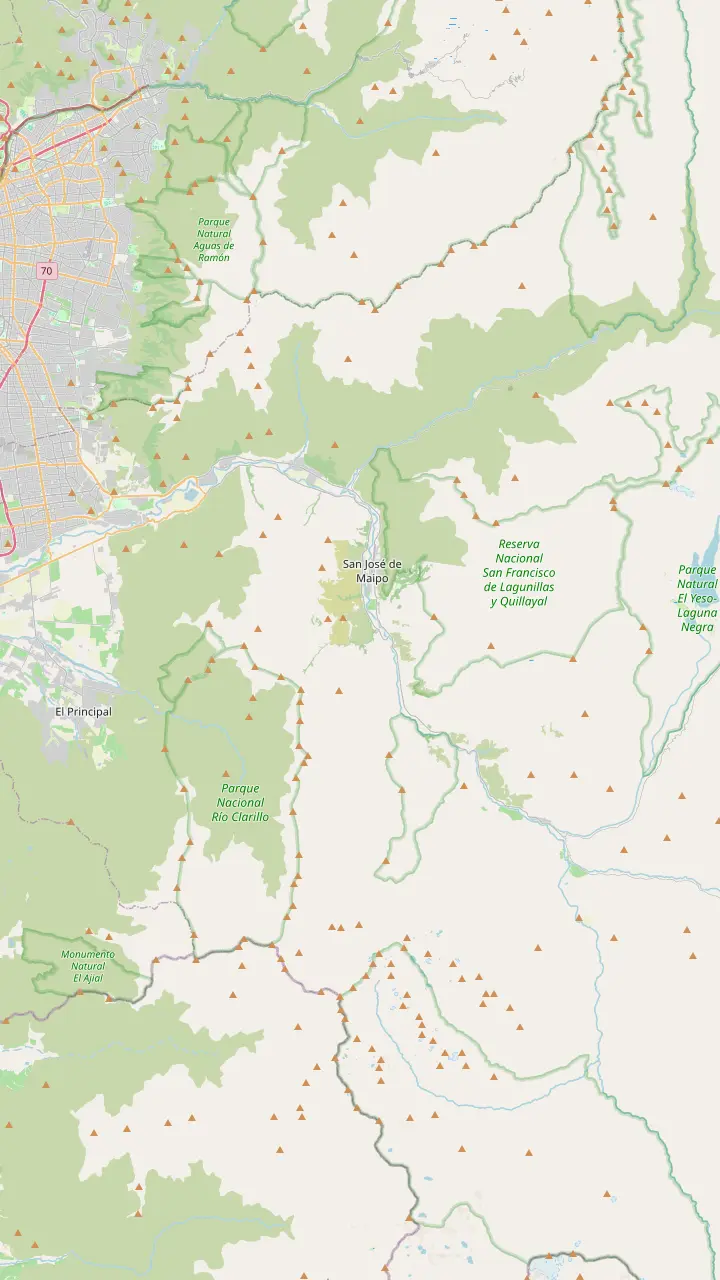
The gateway village from Puente Alto, known for its stonemasons.
Google MapsA small village 30 km from central Santiago, full of summer houses.
Google MapsWhite and red stonework, restaurants and shops line this stretch of the road.
Google MapsLocal craft beer and a sport-climbing crag on Cerro Las Torrecillas.
Google MapsThe capital of the commune: Plaza de Armas, heritage church and weekend craft stalls.
Google MapsA riverside village where rafting and kayak trips set off down the Maipo.
Google MapsRestaurants with dishes such as cazuela and smoked wild boar, plus local wines.
Google MapsThe chocolate house where the site's day tour stops for photos.
Google MapsA nature sanctuary with a short walk to its waterfalls.
Google MapsThe old railway tunnel, a Historic Monument, recommended by the municipality.
Google MapsKnown for the sweets and pastries made in the village.
Google MapsA village born of cattle farming, quarries and mines, high up the main road.
Google Maps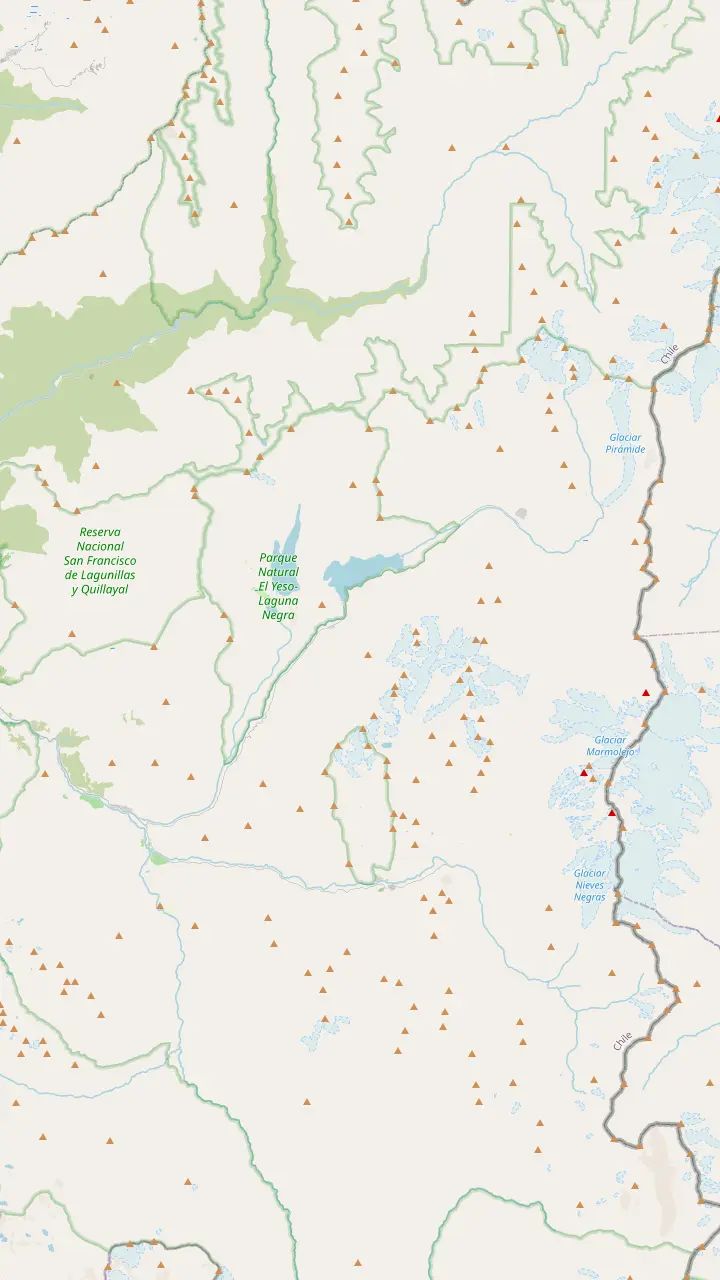
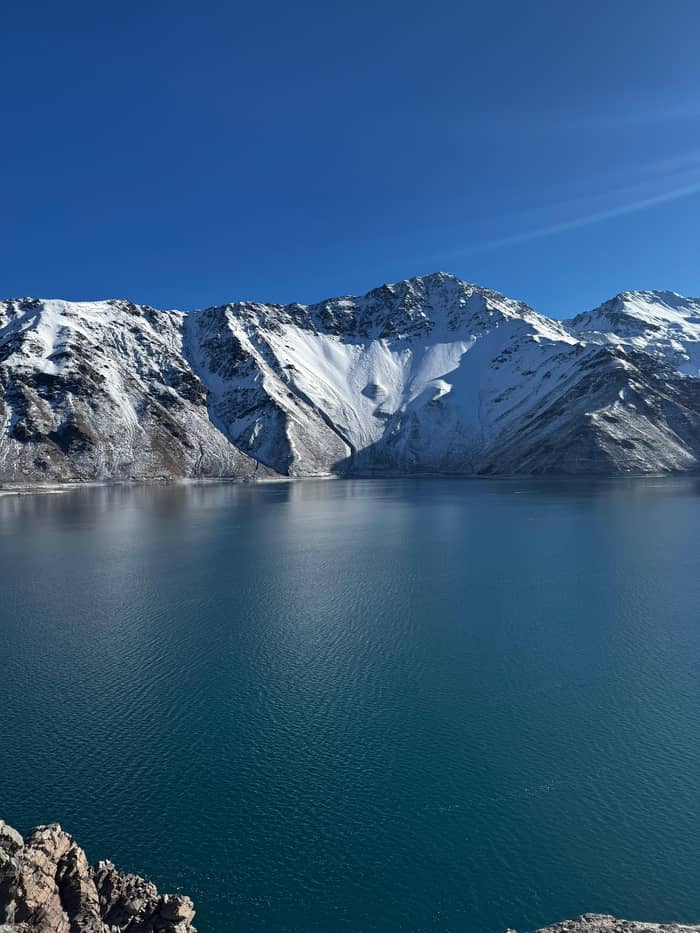
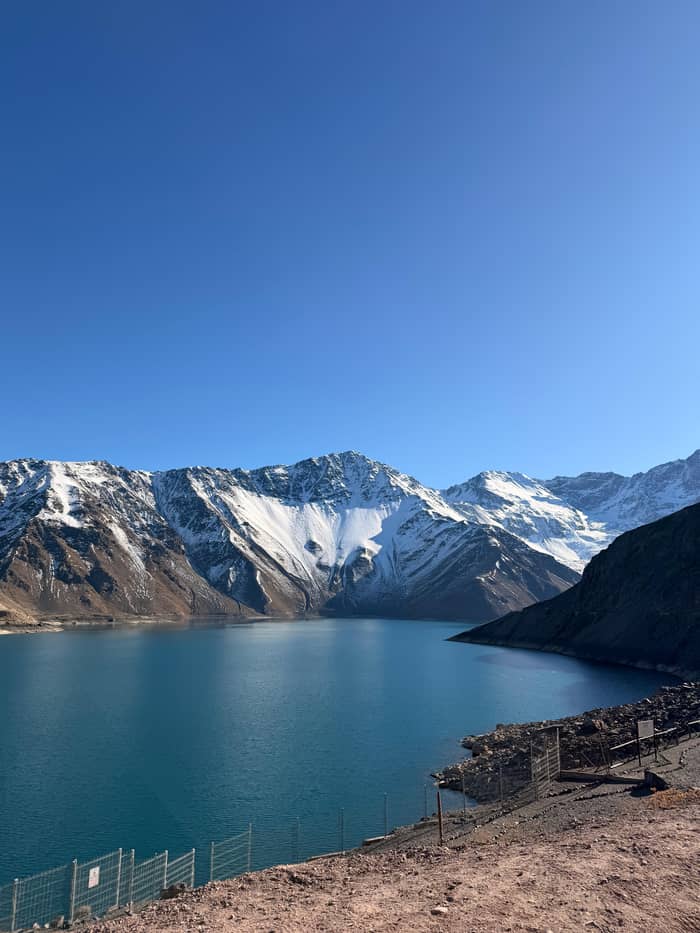
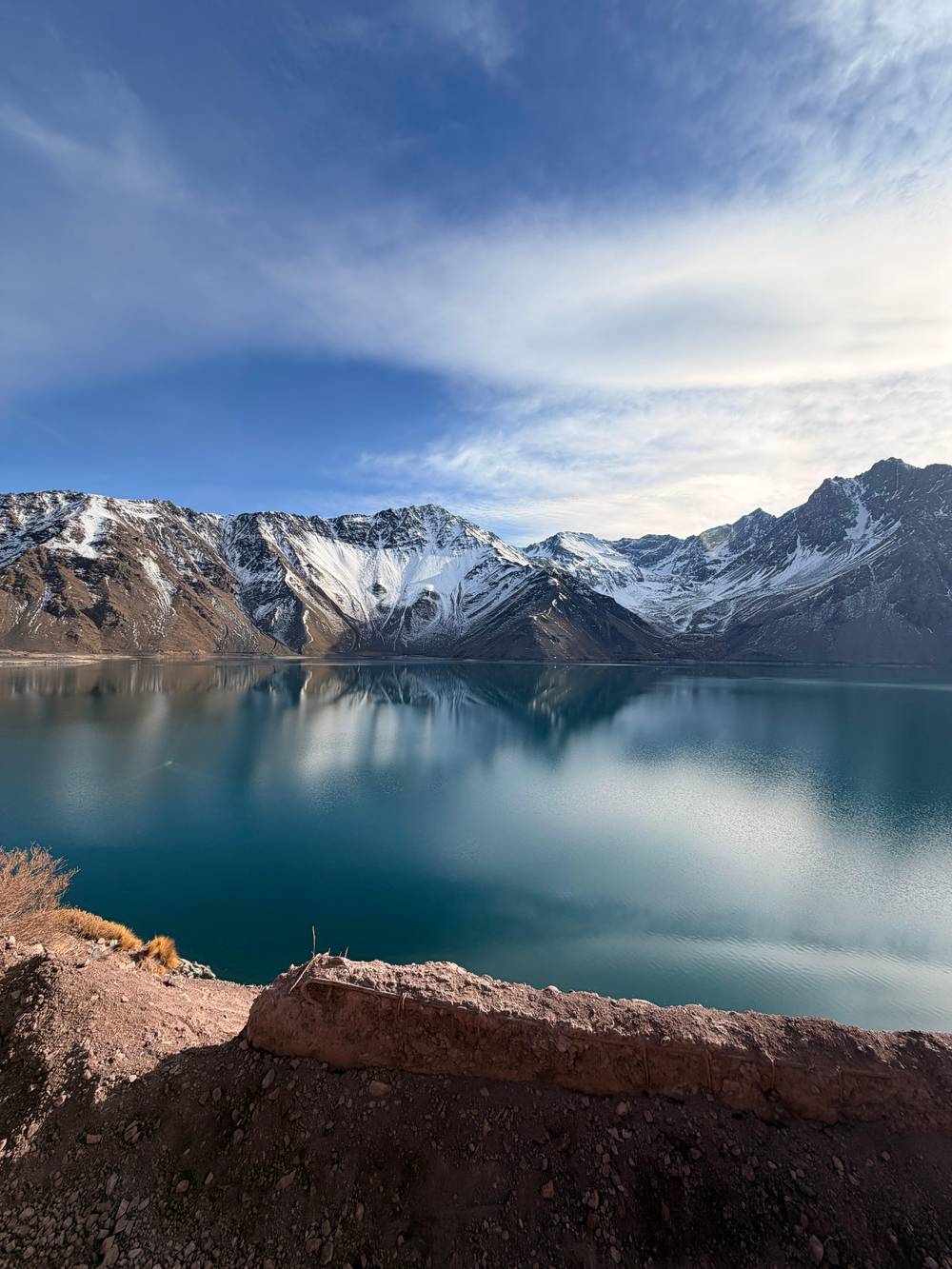
Santiago's main water reserve, a turquoise lake at 2,500 metres.
Google MapsRanger post of the Parque Cordillera area at the reservoir; check the park's opening days first.
Google MapsIts trail opens only with a certified guide or an operator that works with Parque Cordillera.
Google MapsA glacier near the reservoir that has lost much of its mass since the 1990s.
Google MapsThree rustic pools fed by the San José volcano, best from November to April.
Google MapsAn emerald lagoon in a wetland, about an hour's walk away.
Google MapsA village born of cattle farming, quarries and mines, high up the main road.
Google Maps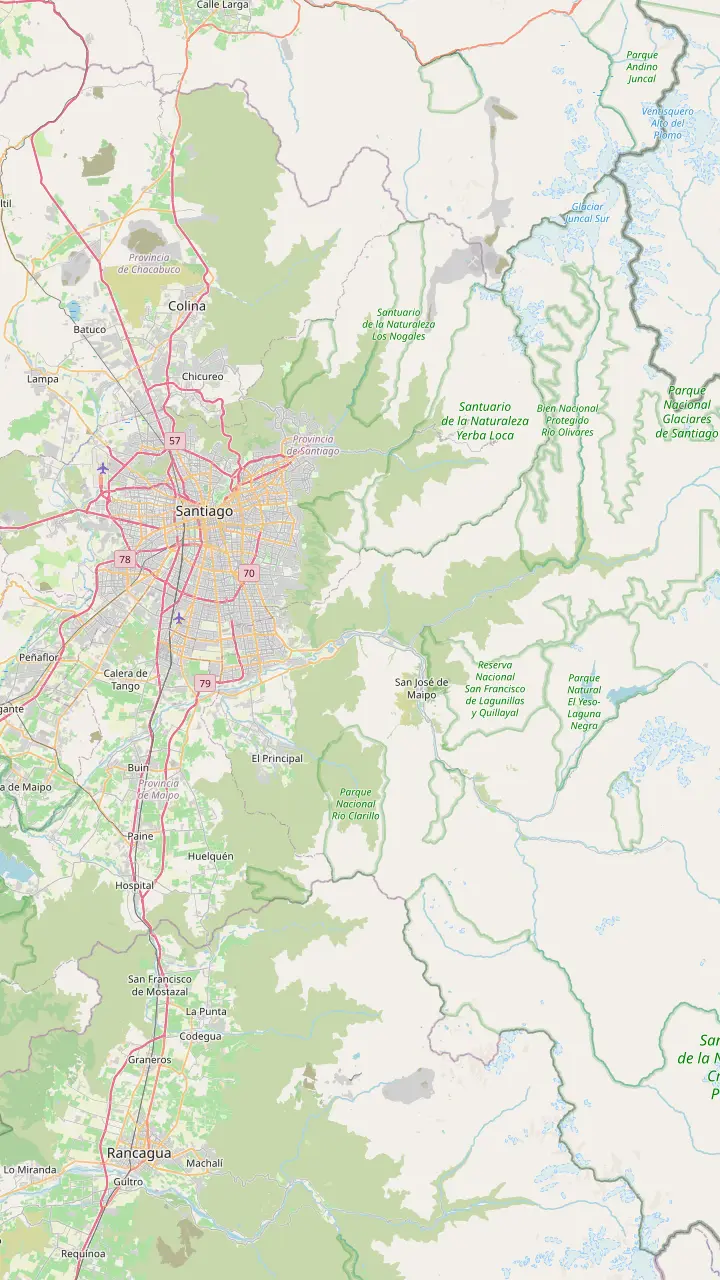
Arrivals land here; the start of the Camino al Volcán is roughly 35 km away by road.
Google MapsThe Metrobus 72 toward Baños Morales leaves this intermodal station in high season.
Google MapsPuente Alto is the town you cross before the road starts to climb into the canyon.
Google MapsThe gateway village from Puente Alto, known for its stonemasons.
Google MapsThe capital of the commune: Plaza de Armas, heritage church and weekend craft stalls.
Google MapsRestaurants with dishes such as cazuela and smoked wild boar, plus local wines.
Google MapsA village born of cattle farming, quarries and mines, high up the main road.
Google MapsRanger post of the Parque Cordillera area at the reservoir; check the park's opening days first.
Google Maps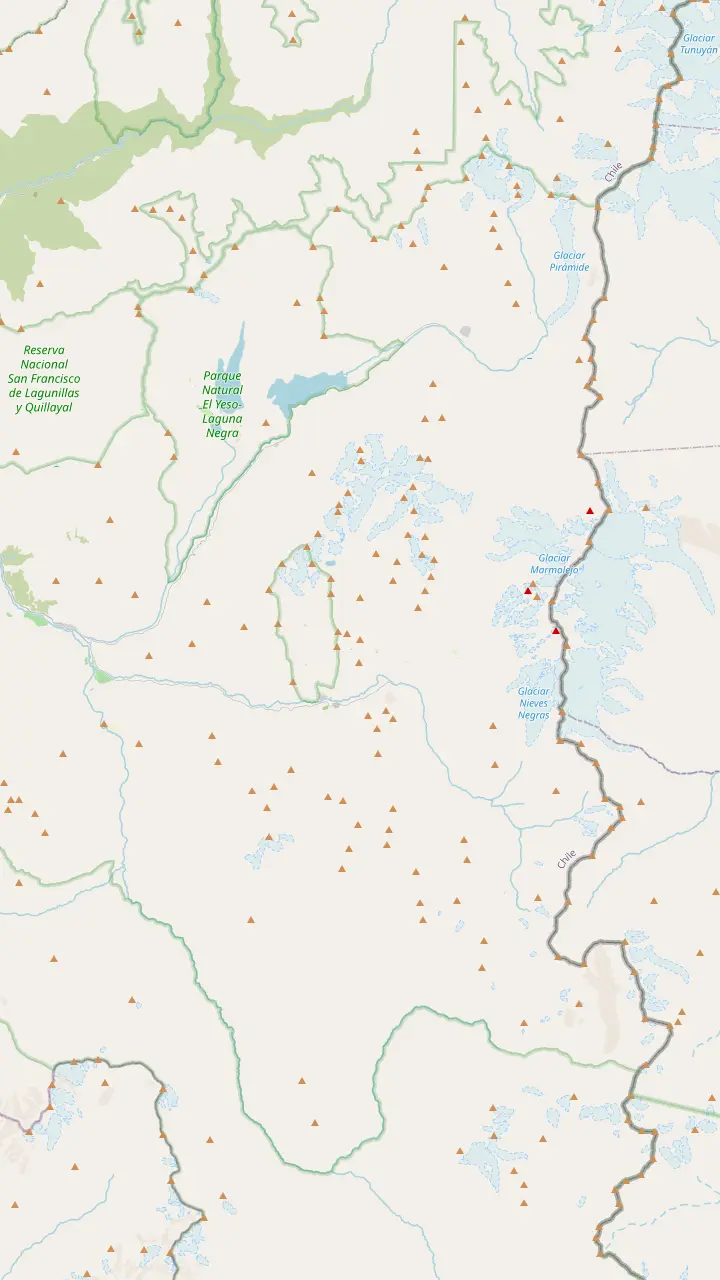
A former mining village where mining tourism is offered.
Google MapsThe village at the entrance of El Morado, with thermal pools and places to eat.
Google MapsThe Valle de la Arena turnoff here starts the trek toward the San Francisco Glacier.
Google MapsBuy entry in advance online; the trail is open only as far as Panimávida.
Google MapsThe glacial lagoon is as far as walkers may go; the glacier itself is off limits.
Google MapsThe peak above the monument reaches 5,060 metres.
Google MapsTerraced natural pools heated by the San José volcano, paid in cash.
Google MapsThe volcano whose heat warms the springs of Colina and El Plomo.
Google MapsMapping data © OpenStreetMap contributors
Many restaurants in the Cajon del Maipo hide in a string of small villages along the Camino al Volcán. Here is where each one sits, what it is known for, what to eat and how the tour's picnic fits into the day.
Editorial team, cajondelmaipotour.quest · Updated November 11, 2026 · 8 min of reading
The canyon is not one place but a chain of small settlements strung along the Maipo. The municipality of San Jose de Maipo lists its localities in the order you meet them on Route G-25, starting with La Obra, the gateway from Puente Alto, where experienced stonemasons work the local rock.5,6,7 The commune counts 23 localities in all, from the edge of Santiago to Baños Colina.8 Only a handful matter for a food lover, and they are easy to reach.
Most of the good restaurants in the Cajon del Maipo line this same road, so you can eat well wherever the day takes you. Las Vertientes, 30 km from central Santiago, is a small village full of summer houses.9 El Canelo follows, with stonework in white and red stone and, in the municipality's words, several restaurants and established shops.10 Then comes El Manzano, where a crag on Cerro Las Torrecillas draws sport climbers.11
Each village sits a little higher than the last. The municipality gives La Obra 780 meters, El Canelo 850 meters and San Jose de Maipo 969 meters, and by San Gabriel the road has reached 1260 meters.12,13,14,15 That steady climb is why the air feels fresher and the light sharper as you go, and why a warm drink feels so welcome higher up. Pack a layer even for lunch, since terraces in the shade cool off fast.
Village guide
| Village | Known for | Good for |
|---|---|---|
| La Obra | Stonemasons7 | A first look at local crafts |
| El Canelo | Restaurants and stonework10 | An easy lunch |
| El Manzano | Craft beer, climbing4 | An afternoon drink |
| San Jose de Maipo | Plaza, church, craft stalls19 | Breakfast and a stroll |
| San Alfonso | Cazuela, rabbit, wild boar2 | Dinner |
| El Ingenio | Sweets and pastries3 | Something to take home |
Villages in the order you meet them on the Camino al Volcán, as the municipality describes them.
The main town is older than it looks. The municipality records its founding as a villa on 16 July 1792, set out around a plaza, with the church and parish house placed facing it.1 The grid of streets laid out then still frames the center today, and it is compact enough to walk end to end in a few minutes. Its historic center is protected as a Zona Típica under a decree of 2010, which protects the look of its older streets.16
Chile Travel suggests stopping in the center to see the Plaza de Armas and the heritage church, and calls the town the adventure capital of central Chile.17,18 On weekends and holidays, the municipality notes, local craft stalls set up on the square, which makes a Saturday the liveliest time to wander.19 The town is also the place to stock up on supplies before heading higher.20 Bakeries and small grocers here are your last easy chance to buy picnic food.
Railways and medicine shaped the place. The line from Puente Alto reached San Jose de Maipo in 1912 and continued to El Volcán around 1922, serving farming, trade and the mines.21 The pure mountain air also brought a hospital for respiratory patients, mainly those with tuberculosis, in the early 20th century.22 A slow walk around the plaza still reveals traces of that past in the older buildings.
Breakfast is the first ritual. Chile Travel names downtown San Jose de Maipo as a good place for it, so plan a coffee and a pastry there before the long climb.27 Further up, the tourism board's canyon itinerary pauses for a traditional empanada lunch before driving on toward the hot springs.30 Eating early and lightly helps at altitude, and leaves room for the snacks and sweets that follow later in the day.
The empanada de pino is the one to try: baked dough filled with meat, onion, egg, olives and sometimes raisins.29 Many come with pebre, a fresh sauce of diced tomato, onion, hot pepper, coriander, lemon and salt.31 The tourism board adds that empanadas are often paired with Chilean red wine, which suits a long mountain lunch better than a quick snack.32 Order them fresh from the oven if you can; they lose much of their charm when they sit.
Save room for the local specialties higher up. El Ingenio bakes the sweets and pastries the municipality singles out, and El Manzano is where Chile Travel sends you to taste local craft beers.3,4 In San Alfonso the municipality recommends the wines and liqueurs of the area, which make good gifts if you are not the one driving.33 Ask for a small tasting before you buy a whole bottle, and keep purchases out of the hot sun in the car.
Plan your meals
Match the stop to your day.
If I want breakfast before the climb
San Jose de Maipo
Chile Travel names it as a first stop for breakfast.27
If I want a hearty dinner
San Alfonso
Its menus include cazuela, rabbit and smoked wild boar.2
If I want something sweet to take home
El Ingenio
The village is known for its sweets and pastries.3
If I want food included in a tour
The featured picnic day
Breakfast stop, cheese tasting and a picnic with wine.
If I am going above the reservoir
Pack a lunch
The tourism board says to bring water and food.28
Pick a base
Breakfast
The historic town
Dinner
Dinner village
Craft beer
Lower valley
San Alfonso is the canyon's dinner village. Chile Travel describes a varied offer there that includes smoked wild boar, stuffed chicken, rabbit, ceviche and cazuela, the hearty Chilean stew.2 It makes a natural last stop on the way down, when the light fades and the temperature drops, and a bowl of something hot feels exactly right. Cazuela, with its chunk of meat, potato and corn in broth, is the classic choice on a cold evening.
Nearby, Cascada de las Ánimas, a protected sanctuary, rewards a walk of 25 minutes with a set of waterfalls, so you can earn your meal before you sit down.38 The sanctuary area also offers birdwatching, puma sightings for the lucky and rafting on the Maipo River.61 The municipality also recommends visiting the Tinoco tunnel, an old railway tunnel listed as a Historic Monument, which the municipality lists under San Alfonso.33
Higher still, the choices thin out. San Gabriel began as a hamlet of cattle farming, quarries and mines, and beyond it the road climbs toward the reservoir and the springs, where you should carry your own food.39,28 At Baños Morales, CONAF mentions food outlets, a mineral pool and basic shops, the last of their kind before the high mountains.49 Above that point, everything you eat is what you brought.
Price your group
Enter your party size for a starting total per day.
Compare 3 side by side
Enter your party size for a starting total per day.
≈
View≈
View≈
ViewCurrency conversion uses the ECB reference rate on GetYourGuide from-prices. The exact price is displayed when you book.
Food on the featured day
Morning
Coffee, tea and breakfast, 70 minutes.
Late morning
Photos and views at El Yeso Dam.
Midday
Cheese tasting and regional food, 50 minutes.
Early afternoon
A 20-minute photo stop in San Jose de Maipo.
Afternoon
Wine and snacks for 1.5 hours.
Food runs through the whole of the site's main day. Its itinerary opens with a 70-minute canyon stop for coffee, tea and breakfast, then 50 minutes at a farm stop for cheese tasting, regional food and animals. The listing's highlights mention goat cheese and handcrafted chocolates, and the chocolate house in town gets a photo stop of 20 minutes. The chocolate house is a storybook-style building, and it is hard to leave without something sweet in a paper bag.
Anyone looking for an Embalse El Yeso picnic should know that on this day the picnic comes after the reservoir, at a last canyon stop of 1.5 hours with wine, local snacks, regional food and a traditional dance show. A sit-down lunch in town is optional, lasts 1.5 hours and is paid separately, for anyone who wants a full meal. Guests meet people dressed in traditional Chilean attire, and the dance is part of the show.
Other days handle food differently. One gives a breakfast stop of 1 hour and a picnic of 1 hour around 80 minutes at the dam, from $36. Another calls its picnic premium and costs from $35. If eating well matters to you, compare what each picnic includes rather than the headline price. Look for the words wine, cheese and local products in the itinerary, and check whether breakfast is part of the deal or paid on the spot.
Video
JansWorldTour on YouTube · Video data is requested only when you tap play.
The delicious empanada de pino consists of a thin, baked bread dough filled with meat, onion, egg, olives, and optionally raisins.
Eat well in the canyon
Much of the tour's last stop is about culture as much as food. Chile Travel presents the cueca as the traditional dance of Independence Day: dancers wave a handkerchief and keep up a rapid tapping of the feet, in a dance that mimics a rooster's courtship of a hen.62 Watching it in the mountains, with the river below, gives it a very different feel from a city stage. The music is lively, the steps are quick and the handkerchiefs keep circling.
The municipality keeps the tradition alive too. San Jose de Maipo holds a communal cueca championship, the 12th edition in 2026, and its culture office sets out to protect the commune's material and immaterial heritage.63,64 Even if your visit does not coincide with an event, the tour's folk show gives you a taste of the dance and the dress that go with it. It is a gentle, cheerful end to a long day in the mountains.
Join in if you are invited; nobody expects perfect steps from a visitor, and a handkerchief and a smile are enough. Clapping along counts as taking part too, and the dancers often seem to enjoy a shy visitor's attempt more than a polished one. Photographs of the dancers are usually welcome, but ask first if you want close portraits, and remember that the dancers are your hosts, sharing a tradition they care about.
If food is your reason to visit the Cajon del Maipo, go on a weekend, when the craft stalls fill the plaza.19 Start with breakfast in San Jose de Maipo, drive up for the views, and come back down for a late lunch or an early dinner in San Alfonso. Keep the drive light on wine if you are at the wheel, and let a passenger enjoy the tastings instead. A slow day with long breaks suits the canyon better than a rush to tick off every village.
Without a car, the lower villages still work well. Public buses serve the town, the tourism board confirms, and the last ones head back to the capital at 8:00 PM or 9:00 PM.65,59 That is enough for a relaxed lunch and a stroll, though not for the reservoir, which the tourism board suggests reaching with a specialized tour.66 Colectivos also run up the valley from the Las Mercedes Metro station.67
If you want the reservoir and the food in one day, a guided day solves the logistics, from the gravel road to the timing of each meal. The featured tour pairs 70 minutes at El Yeso Dam with cheese, chocolate and the picnic, from $42. Add an evening in San Alfonso on a separate trip if you fall for the canyon. A second visit is the best way to try the dinner menus without watching the clock for the last bus or the van.
FAQ
In the remote upper valley the tourism board says to carry water and food.28
The last stop of 1.5 hours adds a traditional dance show.
Lunch in town is an optional extra lasting 1.5 hours.
That is when craft stalls set up on the square.19
The municipality highlights the sweets and pastries made there.3
Sources
Up next
Planning a day in the Andes from Santiago? Ask a real person.