Chart tool
Embalse El Yeso temperature and what to wear on the day
Twelve months at the reservoir
El Yeso through the year, month by month
Choose a month to see the daylight and what to pack for the reservoir.
Sunset
Jan
- Sunset around 20:55
Summer: warm and dry in the valley, but the dam stays windy, so bring a shell.3,5
Sunrise and sunset are worked out for the 15th of each month at the reservoir, on Chile's mainland time with summer time from September to April. Season notes come from Chile Travel (Sernatur) and the park's own notices, not from a weather station: none with published averages sits close enough to the reservoir.
The reservoir sits high in the Andes, where a warm morning can turn to a biting wind by lunch. Here is how the seasons feel at the water and how to dress for each of them.
Editorial team, cajondelmaipotour.quest · Updated November 11, 2026 · 7 min of reading
Facts at a glance
What altitude does to the air at the reservoir
The Embalse El Yeso altitude explains most of what you will feel there. The lake lies at 2,500 metres above sea level, high above Santiago, and the air at that height is thinner, drier and colder than in the city you left at dawn.1 The Embalse El Yeso temperature can feel wintry in the shade even on a bright day, while the sun on your face feels stronger than at home.
Chile Travel describes the mountain climate as variable, with a wide gap between daytime and night-time temperatures, and urges layered clothing, warm clothes and sun protection.2 That is the whole story in a sentence: you will be too warm in the van, too cold at the viewpoint and sunburnt if you forget the cream.
We found no official weather station at the reservoir with published monthly averages, so this guide does not quote temperature figures for the lake. Instead it describes the seasons as Chile's tourism and weather authorities present them, and leaves the day's numbers to the forecast you check before leaving.
Season by season
The reservoir through the year
| Season | Months | What to expect | Wear |
|---|---|---|---|
| Summer | December to March | Warm, dry valley; cold wind at the dam | Layers, sun hat |
| Autumn | April and May | Colder mornings, first snow on peaks | Fleece, shell |
| Winter | June to August | Cool and rainy below, snow above | Insulated jacket |
| Spring | September to November | Warm and moderate in the valley | Layers, shell |
Seasons as Chile Travel describes central Chile; snow can close access from June to September.3,4,9
Summer at the water: dry, bright and still cool
Central Chile has a Mediterranean climate, with warm, dry summers from December to March.3 This is the classic season for the canyon: the road is usually open, the sky is often clear and the turquoise of the lake is at its most vivid against brown and grey slopes. It is also the season to check whether the reservoir park has reopened after its winter closure.
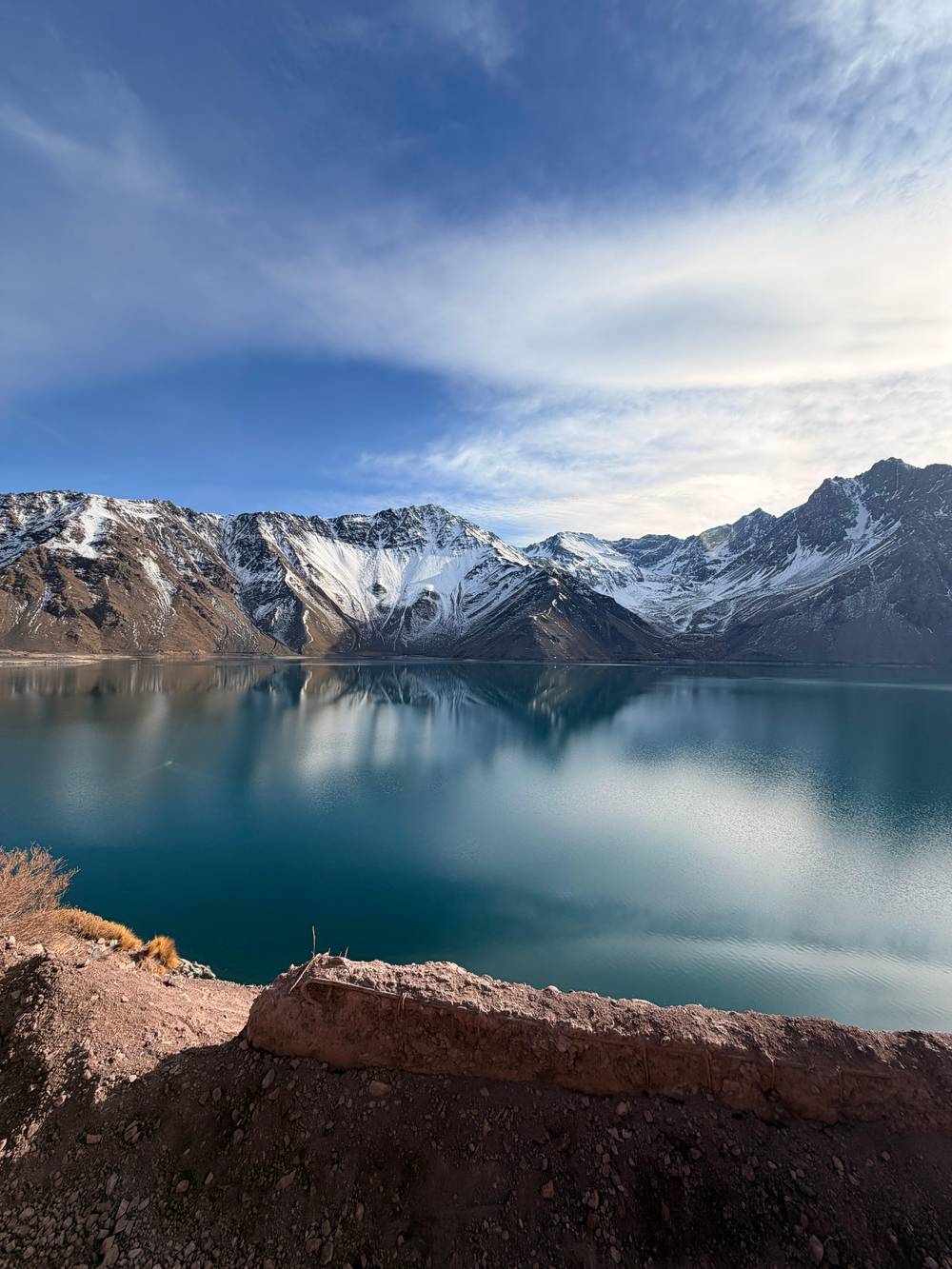
Warm in Santiago does not mean warm at the dam. White summits ring the lake through most months, and the wind that funnels up the valley is cold even when the sun is high.7,5 Chile Travel advises dressing warmer than you think you need, because wind chill at altitude can differ sharply from the city, even on sunny days.8
Summer sun is the other hazard. There is little shade at the viewpoints, and Chile Travel lists sunscreen and sunglasses among the essentials for the canyon.5 A brimmed hat, lip balm and a refillable bottle of water make the dry air far more comfortable through a long day. Reapply sunscreen after lunch, because the reflection from water and pale rock adds to the glare.
A day of changing climates
How the weather shifts through a canyon day
Leaving Santiago
City clothes
Warm in the van; keep your layers in a daypack.2
Morning stop
Cool river air
Mountain weather can turn quickly between cold and heat.
At the dam
Wind and sun
Strong winds and bright sun: shell, sunglasses, sunscreen.5
Afternoon
The chill returns
Chile Travel advises warm clothes for the afternoon.6
Evening
Back in the city
Drop-off around 6:00 PM, back to milder air.
Autumn and spring: the changeable months
The Embalse El Yeso climate is at its most unpredictable in the shoulder seasons. Our tour's listing warns that the mountain weather can change quickly through the day between cold, heat and strong wind, so pack for every kind of weather whatever the month. A morning of blue sky can end under low cloud, and the reverse happens too.
Autumn in the canyon brings fresh snow to the peaks and colder mornings. A rival listing notes that between April and August the walk to the viewpoint at El Yeso takes about 20 minutes, which tells you the season brings changes on the ground as well as in the sky. Wear shoes with grip for that walk.
Spring arrives with September, which Chile Travel describes as a month of warm, moderate temperatures that close the winter and open the way to the new season.9 In the high canyon that change comes later than in the city, and snow can linger on the slopes above the reservoir well into the new season.
Dress for your date
What to wear for the month you go
Pick your month or plan and see what to pack.
If I go in January
Light layers and a shell
Summer is warm and dry, but the wind at the dam stays cold.3,5
If I go in May
Fleece and gloves
From April the walk to the viewpoint can take about 20 minutes.
If I go in July
Full winter kit
Snow and ice can close mountain access between June and September.4
If I add the hot springs
Swimsuit and warm layers
Chile Travel suggests a swimsuit for the springs and warm clothes.5
If I burn easily
Sunscreen and a hat
Chile Travel advises sun protection for a reservoir visit.10
Winter: snow, ice and a closed park
Winter in central Chile runs from June to August, cool and rainy in the valley, and in the high canyon much of that weather arrives as snow instead.3 In the tourism board's words, heavy snow or ice can shut access to mountain destinations from June to September, and the reservoir road is among those that can be cut by snow.4,10
The reservoir park has its own winter rule. When we last read its ticket page, it carried a notice that the park is closed for the winter season, so check that page before you plan a cold-season visit.11 Tours still run up the canyon in the snow season, and our day notes that snow clothing and equipment can be rented along the route at extra cost.
A snowy canyon has its own charm. Chile Travel names the Cajon del Maipo as the easiest place near Santiago to see snow, with white peaks and frozen rivers, and singles out the hot springs at Valle de Colina and Banos Morales for the contrast of warm water and cold air.12,13 Our winter page covers closures and snow days in detail.
Party total
Price a reservoir day for your group
Choose an El Yeso day and the number of travellers.
Compare 3 side by side
Price a reservoir day for your group
Choose an El Yeso day and the number of travellers.
- Our picnic day10 hours, pickup · for one person from $42
≈
View - Picnic with alpacas10 hours, breakfast · for one person from $36
≈
View - Premium picnic day10 hours, pickup · for one person from $35
≈
View
Currency conversion uses the ECB reference rate on GetYourGuide from-prices. The exact price is displayed when you book.
Wind, sun and the afternoon chill
Expect wind. Chile Travel sums up the canyon climate in a phrase about strong winds, and the reservoir sits high in a bare mountain valley with little shelter from a gust.5,14 A windproof shell matters more than a thick sweater, because it stops the wind from stripping away the warmth your layers hold. Zip it up before you step out of the van, not after a gust has already chilled you.
The afternoon is the coldest part of many canyon days. Chile Travel advises sun protection by day and plenty of warm clothes for the afternoon in this remote high country.6 By the time the picnic and the folk show come round, you may want your warmest layer on, especially once the sun drops behind the ridges.
Check the forecast before you go. Chile Travel recommends the forecasts of Meteorologia Chile, the national weather service, and reminds winter travellers that snowfall is possible on the way up.15,16 If the peaks above Santiago are lost in cloud the evening before, the view at El Yeso is likely to be grey too. On such days a hot springs trip or a later date may serve you better than the lake.
Video
The turquoise water of Embalse El Yeso
Chile N Thailand Travel on YouTube · Video data is requested only when you tap play.
Dress warmer than you think you’ll need. The wind chill at high altitudes can be very different from the city, even on sunny days.
Pack list
What to bring to the reservoir
Wear3
- Quick-drying base layer, fleece and wind shell
- Trekking shoes with grip
- A warm hat and light gloves outside summer
Carry3
- Sunscreen, sunglasses and lip balm
- Water and a snack for the day
- A charged phone with offline maps
Check3
- The mountain forecast the evening before
- The reservoir park notice for closures
- Snow gear hire if you travel in winter
What to wear, layer by layer
Start with a base layer that dries quickly, add a fleece or light down jacket, and top it with a windproof and ideally waterproof shell. Long trousers beat shorts even in summer, both for the cold wind and for the sun. Bring a warm hat and light gloves from April to October; in winter, add a proper insulated jacket.
Footwear matters more than people expect. Chile Travel recommends trekking shoes for the canyon, and the walks at the dam are on gravel and uneven rock.5 City trainers will do in dry summer conditions, but boots with grip are safer once frost or snow appears. Thick socks help too, as feet cool quickly while you stand at a viewpoint taking photos.
Carry a small daypack for the layers you take off in the van and put back on at the viewpoint. Add sunscreen, sunglasses, lip balm, water and a snack, as Chile Travel suggests for a remote mountain day.5,6 If your day includes hot springs, pack a swimsuit and towel as well, plus a plastic bag for wet things on the ride home.
Thin air, children and older travellers
Take the short walks slowly at 2,500 metres and drink water; the thin air makes a gentle slope feel steeper than it looks.1 If anyone in your party has a heart or lung condition, ask a doctor before the trip; this guide cannot give medical advice. Sit down and rest if you feel dizzy, and tell the guide early rather than late.
Children feel the cold faster than adults, especially in the wind at the dam. Dress them in layers they cannot easily shed, with a hat and gloves, and keep snacks to hand; a hungry, cold child is a miserable passenger. Hiking days in the canyon set their own age limits, so read the listing; the volcano hiking day suggests ages 8 to 65.
Older travellers should plan for the long day as much as for the altitude. Bring water, snacks and a charged phone, Chile Travel suggests, because signal is patchy or missing in parts of the range.17 A shared tour with a guide and a van is the easiest way to enjoy the reservoir without the strain of driving the gravel road yourself.
FAQ
The short answers to your questions.
How cold is it at Embalse El Yeso?
When is the warmest time to visit?
Central Chile has warm, dry summers in those months, Chile Travel says.3
Is there snow at El Yeso?
Chile Travel says the ranges around the reservoir wear snow through much of the year.7
Does the road close in winter?
The high road may close in winter due to snow; check before you go.10
What shoes should I wear?
Chile Travel recommends trekking shoes for the canyon's paths and strong winds.5
Do I need sunscreen in winter?
Chile Travel lists sun protection among the essentials for the reservoir, and snow adds glare in winter.10
Where can I check the forecast?
Chile Travel recommends the forecasts of Meteorologia Chile before travelling.15
Sources
- Sernatur, Chile National Tourism Service (chile.travel) · Cajon del Maipo ↩
- Sernatur, Chile National Tourism Service (chile.travel) · San Jose de Maipo ↩
- Sernatur, Chile National Tourism Service (chile.travel) · Climate and weather ↩
- Sernatur, Chile National Tourism Service (chile.travel) · Where to see snow in Chile if you don't want to (or don't know how to) ski ↩
- Sernatur, Chile National Tourism Service (chile.travel) · A few kilometers from Santiago: What to do in the Cajon del Maipo ↩
- Sernatur, Chile National Tourism Service (chile.travel) · Termas Valle de Colina ↩
- Sernatur, Chile National Tourism Service (chile.travel) · Embalse El Yeso ↩
- Sernatur, Chile National Tourism Service (chile.travel) · Where to see snow in Chile if you don't want to (or don't know how to) ski ↩
- Sernatur, Chile National Tourism Service (chile.travel) · Independence Day in Chile: culture, gastronomy and traditional celebrations ↩
- Sernatur, Chile National Tourism Service (chile.travel) · Embalse El Yeso ↩
- Asociacion de Municipalidades Parque Cordillera (its ticket page on Puntoticket) · Parque el Yeso - Laguna Negra ↩
- Sernatur, Chile National Tourism Service (chile.travel) · Where to see snow in Chile if you don't want to (or don't know how to) ski ↩
- Sernatur, Chile National Tourism Service (chile.travel) · Where to see snow in Chile if you don't want to (or don't know how to) ski ↩
- Sernatur, Chile National Tourism Service (chile.travel) · Embalse El Yeso ↩
- Sernatur, Chile National Tourism Service (chile.travel) · Climate and weather ↩
- Sernatur, Chile National Tourism Service (chile.travel) · Cajon del Maipo ↩
- Sernatur, Chile National Tourism Service (chile.travel) · Where to see snow in Chile if you don't want to (or don't know how to) ski ↩
Up next