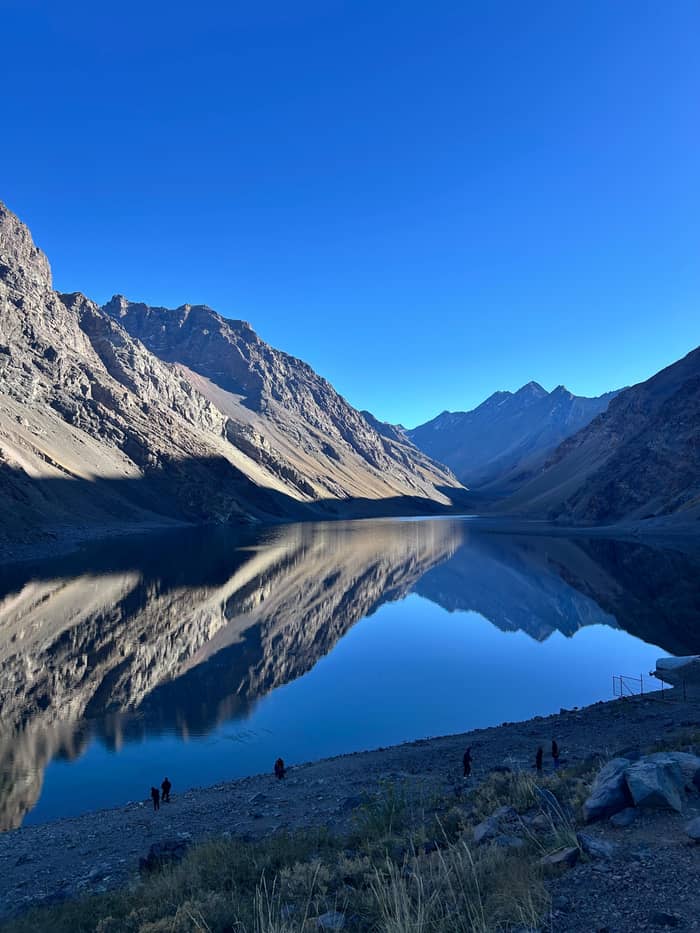
Featured day
Colina and folk picnic
Featured on this page
- Length9 hours
- At the springs180 minutes
- ExtrasPicnic, wine toast
See your group's price
Cajon del Maipo and Hotsprings + Tradition Folk (ticket included)
★ 4.1 · 494 guest ratings
Compare 4 side by side
Choose a day to see its starting total.
≈
View≈
View≈
View≈
ViewCurrency conversion uses the ECB reference rate on GetYourGuide from-prices. The exact price is displayed when you book.
A Cajon del Maipo hot springs tour takes you to steaming pools high under the San José volcano. Here are the springs you can reach, how hot and how high they are, when they open, and how a soaking day compares with the classic picnic day.
Editorial team, cajondelmaipotour.quest · Updated November 11, 2026 · 8 min of reading
The thermal water of the upper canyon has one source of heat. Chile Travel explains that the springs at Valle de Colina are warmed by the San José volcano, which feeds mineral-filled pools high in the valley.6 On this page you will find the soaking spots the official sources describe, plus what a Cajon del Maipo hot springs tour adds to the day: transport, timing and someone who knows the gravel.
The most famous springs, Termas Valle de Colina, sit in the last inhabited corner of the canyon, at kilometer 89 of Route G25 in the tourism board's description.7 Its attraction page counts nine terraced pools that reach high temperatures thanks to the volcano.1 Further down the valley, Baños Morales offers thermal pools in a village, and Termas del Plomo hides near the reservoir in a side valley of its own.
None of these are spas in the resort sense. The water flows from the ground into rock and mineral basins, the setting is bare high mountain, and services are basic or absent. That is exactly the appeal: hot water, cold air and a ring of peaks. It also means you should arrive with food, water, a towel and warm clothes, and with realistic expectations about changing rooms. Flip-flops or water shoes help on the rough, slippery edges of the basins.
Compare the springs
| Spring | Pools and heat | Altitude | Best for |
|---|---|---|---|
| Valle de Colina | 9 pools, up to 55 °C2 | Over 2,500 m12 | A full soaking day |
| Baños Morales | Thermal pools in a village14 | About 1,800 m14 | After the El Morado walk |
| Termas del Plomo | 3 rustic pools, 37 °C15 | Above the reservoir16 | Summer explorers |
Pool counts and temperatures as Chile Travel and the municipality describe them; one tour listing counts 7 pools at Colina.
Colina is the big one. Chile Travel's hot springs guide describes 9 open-air pools set one above another, the highest reaching 55 °C and the water cooling as it spills into the basins below.2 So you choose your temperature by choosing your pool, starting low and moving up as your body adjusts. Dip in and out rather than staying in the hottest water for long, and sit on the rim to cool down when you feel light-headed.
The pools themselves are a geological curiosity. The tourism board explains that they were formed by calcareous deposits left by the mineral-rich geothermal water.10 Another of its pages describes steaming water rising naturally out of the ground beside the Colina River.11 The result looks like a staircase of cream and rust colored basins on a mountainside, with steam drifting across the valley on cool mornings.
Altitude figures differ between official sources. Chile Travel places Termas Valle de Colina higher than 2,500 meters.12 The municipality's table of localities places Baños Colina at more than 3,500 meters and calls it the last destination on the canyon route.13 Either way, the air is thinner and the sunshine harsh, so drink water, keep your head covered between dips and climb out slowly.
Time in the water
Time at the Colina springs as each listing's itinerary gives it.
Baños Morales is the village option. The municipality places it at about 1,800 meters and describes thermal pools rich in mineral salts that draw visitors every summer.14 It lies right at the entrance of El Morado Natural Monument, where Chile Travel suggests a soak after the trek to the glacial lagoon.17 CONAF adds that the village has restaurants, a mineral-water pool and stores for basics.18
Termas del Plomo feel far more rustic. A Chile Travel guide from 2021 describes three rustic natural pools fed by the San José volcano, with water reaching 37 °C.15,19 The road there runs along the Maipo River and passes the El Yeso reservoir, and a canyon itinerary puts the springs a 10 km trip further into the range from the lake.20,16 Plan it as an independent trip with your own transport and a picnic in the car.
Near El Plomo, an hour's walk leads to Laguna de los Patos, an emerald lagoon set in a wetland.21 The best season for these springs runs from November to April, and the same guide warns that access may become difficult in late autumn and winter.5 If you want the termas near Embalse El Yeso, El Plomo is the one, but it needs a capable vehicle, a summer date and a full day set aside for the trip.
Pick your springs
Answer by what matters most.
If I want the longest time in the pools
The featured Viator day
It gives 180 minutes at Termas Colina.
If I want the lake and the springs
A combined day
One tour spends 80 minutes at Colina and 30 at the dam.
If I want to walk before I soak
The walk and soak day
A 2.5-hour walk comes before an optional swim.
If I am hiking El Morado
Baños Morales
Its springs sit at the monument's entrance.17
If I want wild, rustic pools
Termas del Plomo
Hot springs days
Featured day
Featured on this page
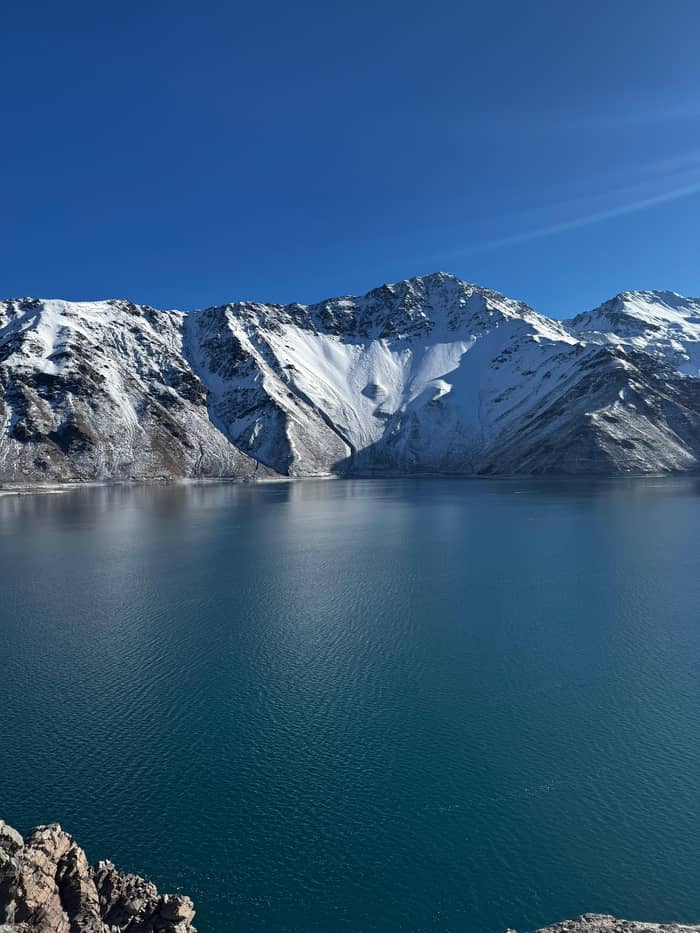
Summer only
El Yeso first
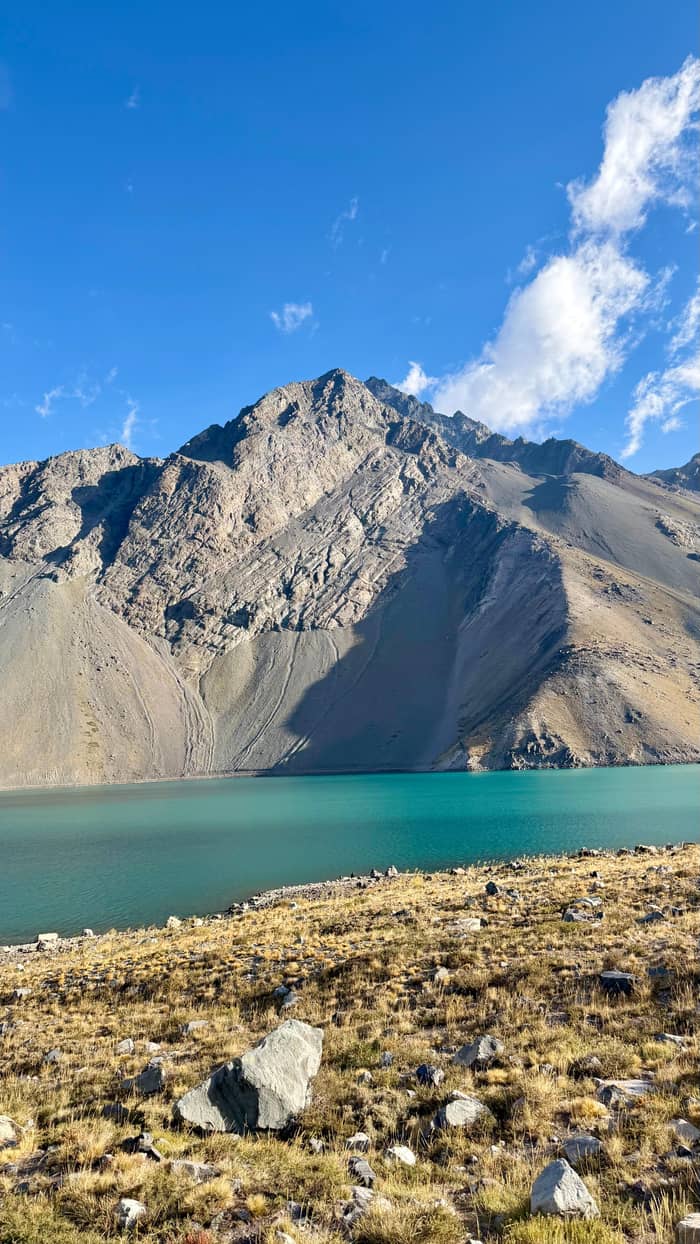
Active day
Small group
Season decides almost everything. Day tours to Colina are planned around good weather: one listing states that it only runs in certain summer weather conditions. For El Plomo the tourism board names November to April as the best months.5 Outside that window, roads above the reservoir can be blocked, and the springs that stay reachable vary from week to week. A tour that runs one week may be cancelled the next if snow or rockfall closes the road.
Winter has its own magic. Chile Travel's snow guide picks Termas Valle de Colina and Baños Morales as places where hot water and a snowy landscape meet, and asks visitors to check the springs' social media before heading up because access depends on snowfall.27,24 CONAF lists rockfall, avalanches, snowstorms and mudflows among the risks in the upper valley from May to September.28 A winter soak is unforgettable when it works, but it needs flexible dates.
The practical advice is simple: confirm before you go. The tourism board recommends checking road conditions and schedules on the hot springs' official website.23 If you book a tour, the operator handles that check for you, and free cancellation leaves room to change plans: the featured Viator day allows free cancellation until 24 hours before it starts. Have a backup plan for the lower canyon in case the upper road stays shut on your date.
A soaking day
Leaving Santiago
A first stop of 30 minutes in the valley.
Mid-morning
An old railway tunnel, a Historic Monument.8
Late morning
Plaza, church and a short break.9
Midday
180 minutes in the pools.
Late afternoon
Back in Santiago around 6:00 PM.
Colina is far. Chile Travel gives 109 km from Santiago along Route G-25, a journey of close to 2 hours and 30 minutes.29 The last stretch is gravel, and the same page calls a 4x4 or high-displacement vehicle essential, especially in winter, adding that a tour operator is the smoothest option.25 The drive up the final valley is slow, dusty and spectacular, with the volcano coming into view as you near the springs.
This is remote country, so prepare like it. The tourism board tells visitors to bring water, food and enough fuel, to wear sun protection during the day and to pack plenty of warm clothes for the afternoon, when the valley cools quickly.30,22 Do not count on a phone signal up here, so settle on a regrouping time before people drift off between the pools, and keep a dry bag for your phone and car keys.
Money is old-fashioned up here. In its March 2025 article the tourism board said entry to the Valle de Colina springs is paid only in cash and starts at CLP 10,000.3,4 Prices move over time, so confirm the present fee before you drive up and take some spare notes. Some tours include the entry ticket: the featured Viator day names the ticket in its title, so read each listing to see whether yours does.
Video
30 And A Wake Up on YouTube · Video data is requested only when you tap play.
The pools were formed by calcareous deposits caused by the high concentration of minerals in the geothermal water.
Pack for the pools
The featured day on this page is a long loop. It lasts 9 hours, stops in the canyon, at the old Tinoco tunnel and in San Jose de Maipo, and gives 180 minutes at Termas Colina, which it describes as a site with 7 natural pools. It ends with a picnic of cheeses, charcuterie and a wine toast, and returns to Santiago around 6:00 PM, from $64. Guides speak Portuguese, English and Spanish.
Other days balance the springs and the lake differently. One spends 80 minutes swimming at Termas Valle de Colina and 30 minutes at El Yeso Dam, from $85. Another gives 1.5 hours at the reservoir and 105 minutes at the springs, adds lunch and Casa Chocolate, and costs from $90. If soaking is the point, look for the longest block at the pools, because travel time eats most of any day this far up the canyon.
Some days mix walking and water. A small-group tour limited to 12 starts with a guided walk of 2.5 hours, then allows an optional 1.5 hours of swimming before a picnic with wine, from $170. Its operator rates it easy to intermediate and suitable for children over 8 and adults up to 75, with pickup starting at 6:30 AM. It suits fit travelers who want a little effort before their reward.
The site's main tour and a hot springs tour share the same road but not the same rhythm. The picnic day gives 70 minutes at El Yeso Dam, then a cheese tasting, the chocolate house and a final picnic with dancing. A springs day trades most of that for hours in warm water at the top of the valley, which suits travelers who want rest more than sightseeing. Both days start early and finish in the evening, so the real choice is how you spend the hours in between.
Choose the springs if you have done the reservoir before, if you travel in summer and want a slower day, or if the idea of soaking under a volcano is the reason you came. A Termas de Colina tour is also the easiest way to reach the pools without driving the gravel yourself, as the tourism board itself suggests.25 You sit back on the way up and arrive ready to soak instead of tense from the road.
Choose the picnic day if this is your first trip into the canyon, if you travel with small children or if your dates fall in the colder months. Either way, pack a swimsuit just in case: one combined tour asks guests to bring a bathing suit and a towel for the springs, and the tourism board suggests including a swimsuit for the hot springs in any canyon trip.31 Pack a dry shirt and socks for the van back to Santiago.
FAQ
The water cools as it flows down to the lower pools.2
El Plomo is best from November to April, and one Colina tour runs only in summer weather.5
It calls a 4x4 or high-displacement vehicle essential on the gravel.25
Access depends on snowfall, so check the springs' social media first.24
Sources
Up next
Planning a day in the Andes from Santiago? Ask a real person.