Chart tool
Astronomical tour in the Cajon del Maipo
Astronomical Tour in Cajon del Maipo
★ 3.8 · 3 guest ratings
Twelve months of night sky
Sunset over the canyon, month by month
Choose a month to see when the sun sets and what the season means for a night under the stars.
Sunset
Jan
- Sunset around 20:55
Midsummer: dark comes late, and canyon nights are still cold, so pack a coat.6
Sunset is worked out for the 15th of each month at San Jose de Maipo on Chile time, with summer time from September to April. Season notes come from Chile Travel and the municipality of San Jose de Maipo, not from a weather station: none lies close enough to the canyon.
An astronomical tour in the Cajon del Maipo puts a telescope under a mountain sky an easy drive from Santiago. Here is where to go, what you will see in the southern sky, how cold it gets and how to pick a good night.
Editorial team, cajondelmaipotour.quest · Updated November 11, 2026 · 8 min of reading
Why look up from the Andes
Chile has built a reputation on its sky. According to the national tourism board, Chile counts over 300 cloudless nights in a year and is home to 40% of the planet's facilities for watching the sky.1,7 Most of that science happens in the north, but you do not need to fly to the desert to see the southern sky properly: an astronomical tour in the Cajon del Maipo gets you under it within reach of Santiago.
The canyon has its own observatories and dark corners. Chile Travel describes Parque Pailalén, in the commune of San Jose de Maipo, as running a night program that mixes a walk with stargazing, beneath what the board calls some of the region's clearest skies.8 It presents the park as a chance for a night-time activity far from urban life, which is precisely what the city's glow denies you in Santiago.9
Santiago itself is part of Chile's astrotourism route, with initiatives such as the Andean Astronomical Observatory.10 The canyon adds mountains on every side, fewer lights and a cold, dry air that makes the stars feel very close. If you have one free evening near the capital and a clear forecast, this is a memorable way to spend it. Schedule it near the start of your trip, so that bad weather can be answered with a later date.
Compare the options
Where to see the stars in the canyon
| Place | What you get | How to get there |
|---|---|---|
| Roan Jasé Observatory | Telescopes, solar and night viewing11 | In the canyon, by car or tour |
| Parque Pailalén | Telescopes, lessons, dinner3 | About 1 hour 30 minutes by car13 |
| Guided night | Telescopes, talk, meteorites | Pickup included |
Programs as Chile Travel and the listing describe them; check each operator's current schedule and language before you book.
The observatories and parks in the canyon
The official pages point to a pair of places. Chile Travel's list of observatories near Santiago describes the Roan Jasé Observatory, set among the peaks of the Cajon del Maipo, with guided stargazing tours and naked-eye observation, plus a look at the area's rock formations.2 Its astrotourism guide adds daytime solar observation and night viewing through telescopes of different sizes.11
Roan Jasé also stands out for its storytelling. The tourism board says its tour weaves Mapuche ideas about the cosmos into classic astronomy, so you hear how the people of the south read the same sky.12 Constellations take on new shapes and names, and the familiar becomes strange again. That mix of science and culture makes this observatory tour in the Cajon del Maipo a good choice for families and for anyone who enjoys stories as much as statistics.
Parque Pailalén is the second option. Its tours, according to Chile Travel, include observation with the latest generation of telescopes, lessons about the cosmos and dinners under the stars.3 The tourism board recommends getting there by car, a drive of around 1 hour and 30 minutes down the Camino al Volcán from the city.13 Dinner and telescopes in one place make it an easy choice for couples and small groups.
Dress for it
How cold canyon nights can be
- Winter low1
- Year average14
- Summer high28
Temperature range for the San Jose de Maipo area as the municipality gives it; nights at the observation sites are colder than the daytime figures suggest.14
What the southern sky shows you
Visitors from the northern hemisphere meet a new sky here. Chile Travel lists the southern constellations you can admire from the country's dark sites, among them Scorpius, Centaurus, the Southern Cross and the Magellanic Clouds.4 The Magellanic Clouds are small companion galaxies that appear as faint smudges beside the Milky Way, and guides tend to show them early once your eyes adjust. Give your eyes a good while away from bright screens to see them well.
Through a telescope, the Moon's craters, Saturn's rings and the bands of Jupiter are the classic showpieces, depending on which planets are up. Star clusters and nebulae in the band of the Milky Way fill the rest of the evening. A good guide will hand you a red light, aim the instrument and let you take your time at the eyepiece. Ask questions freely; the best evenings feel like a conversation rather than a lecture.
The guided night on this page combines telescope observation with a talk by an expert and a display of meteorites. Holding a piece of rock that fell from space while looking up at the sky it came from is the kind of detail that stays with children long after the trip, and adults tend to linger over it too. Bring a small notebook if your children like to sketch what they see through the telescope.
Pick your night
Which sky outing suits you?
Answer by what you want from the evening.
If I want transport handled
The guided night
Pickup is included on the 6-hour outing.
If I want culture with the stars
Roan Jasé
Its tour adds the Mapuche worldview.12
If I want dinner under the sky
Parque Pailalén
Its tours include dinners under the stars.3
If I travel with small children
Dress them very warmly
The listing warns young children may feel colder.
If I want the canyon by day too
Add the picnic day
70 minutes at El Yeso Dam and a picnic.
Picking the night: Moon, weather and season
The Moon decides more than any other factor. Around full Moon the sky turns bright and faint objects disappear, while the nights around new Moon reveal the Milky Way in full. If your dates are flexible, look at a Moon calendar before booking and aim for a night when the Moon is a thin crescent or below the horizon. A bright Moon still makes a fine telescope target, so it is not a wasted night, only a different one.
Clouds come next. Chile Travel's canyon itinerary warns of a mountain climate with strong winds, and a cloudy or stormy night means little to see.16 Operators watch the forecast and may move a booking if the sky closes in. The guided night's booking terms give a full refund up to 24 hours before departure, handy when clouds roll in over the valley. Watch the forecast for the canyon itself rather than Santiago, as the mountains can be clear while the city lies under haze.
Season changes the experience. In summer the sky darkens late, so evenings begin well into the night. In winter it is dark earlier, but the cold is serious: the municipality gives an average winter minimum of 1 °C in the San Jose de Maipo area, against 28 °C in summer.14 Spring and autumn nights sit between the two and often make the most comfortable compromise.
Price your group
Price a night and a day
Add your group to see the starting totals.
Compare 2 side by side
Price a night and a day
Add your group to see the starting totals.
- Guided stargazing night6 hours · for one person from $98
≈
View - Folk and picnic day10 hours · for one person from $42
≈
View
Currency conversion uses the ECB reference rate on GetYourGuide from-prices. The exact price is displayed when you book.
A night under the stars
How a guided evening unfolds
Late afternoon
Pickup in Santiago
Transport is included.
Sunset
Into the canyon
Away from the city's light, toward the mountains.9
Dark
The expert talk
Stories of the sky and a meteorite display.
Night
At the telescope
Planets, clusters and the southern constellations.4
Late night
Back to the city
A photo of the night arrives later by message.
Cold nights and the right clothes
Even a summer night in the canyon is cold. Chile Travel advises a coat and a raincoat because nights are cold even in summer, and it specifically recommends a warm jacket for night-time astronomical observation.6,5 Standing still at a telescope chills you far faster than walking, so dress for more cold than the thermometer suggests. Layers work better than one heavy coat, because you can adjust them between the talk indoors and the telescope outside.
The guided night's own list is practical: warm clothes because the temperature drops at night, water, lip balm and moisturizer for the dry air, and comfortable shoes. It rates the outing easy and admits all ages, while noting that young children may feel colder or sleepier. A hat, gloves, a thermos and a blanket for the van make the evening far more pleasant. Hand warmers are cheap and weigh almost nothing in a pocket.
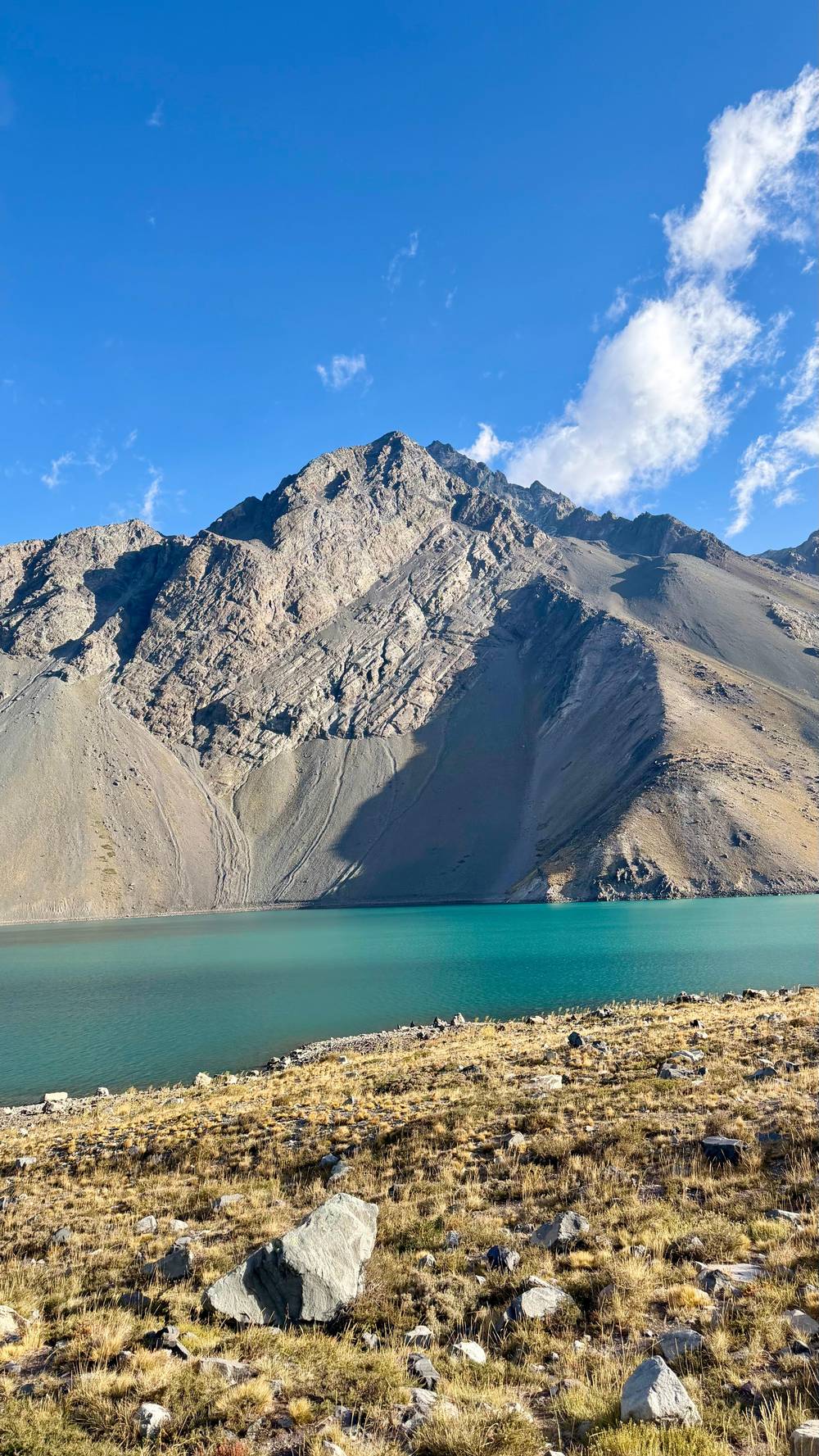
The tour site sits at approximately 1,000 to 1,100 meters, a comfortable height for a night outing. Higher sites in the canyon are colder still, and much harder to reach after dark: the reservoir lies at 2,500 meters, and the tourism board warns that its road may close in winter for snow.17,18 On a winter night, a lower site is the comfortable choice, and it keeps the drive home short.
Video
The southern hemisphere skies: a guide to astronomy down under
Arthur's Science on YouTube · Video data is requested only when you tap play.
The tour blends classical astronomy with elements of the Mapuche worldview.
For the night
Stargazing checklist
Joining a guided night from Santiago
Driving a mountain road in the dark after a late night is not the most relaxing plan, especially on a curving valley road you do not know at all. Letting someone else drive means you can doze on the way back. The guided night on this page includes pickup, lasts 6 hours and is led in Spanish, from $98. The listing marks it as wheelchair accessible and lists restrooms on site.
It is a small product so far, with 3 reviews, so set your expectations by its program rather than by a long track record. The program is clear: telescope observation, the expert talk and the meteorite display, with a photo taken during the night and sent later by message. If you prefer an English-speaking guide, contact the observatories directly or ask the operator before booking.
If you want a full astro tour in the Cajon del Maipo, combine the night with a day trip on a different date. The site's featured day tour gives you 70 minutes at the dam before a picnic lower down, from $42. Seeing the valley by daylight first helps you picture the peaks that frame the sky at night, and it turns a single outing into a proper visit to the canyon. Keep the two on separate days, as both start early or end late.
Photographing the night sky
The canyon is a fine place for a first attempt at astrophotography. Bring a tripod, a camera that allows long exposures and a wide lens, set manual focus on a bright star and start with exposures of a few seconds. Ridges and trees in the foreground give scale to the Milky Way and make a picture feel like a place rather than a chart. Take a few test shots early, before the coldest hours drain your batteries.
Keep your lights low. White light ruins your eyes' adaptation and other people's photos, so switch your phone to night mode, dim the screen and use a red torch. Keep a spare battery warm in an inside pocket, since cold empties them quickly. If you join an observatory tour, ask before setting up a tripod near the telescopes; guides can often help once the main observation is done.
Finally, respect the mountain at night as you would by day. Stay on the paths at the site, take every wrapper back with you and keep noise down so others can enjoy the silence. Chile Travel asks visitors to the canyon to respect the environment and leave no trash, a rule that matters even more when you cannot see where things fall.15 An observatory tour is also the most comfortable way to find a dark, safe spot without wandering roads at night.
FAQ
The short answers to your questions.
Where can I stargaze in the canyon?
How long is the guided night?
It includes telescope observation, a talk and a meteorite display.
In which language is it guided?
Spanish is the only guiding language listed.
How cold are the nights?
What will I see in the sky?
Look for Scorpius, Centaurus, the Southern Cross and the Magellanic Clouds.4
Can children join?
The listing warns that young children may feel colder or sleepier.
How far is Pailalén Park from Santiago?
Chile Travel suggests driving down the Camino al Volcán.13
Sources
- Sernatur, Chile Travel (official tourism site of Chile) · Astrotourism in Chile: The best place in the world to stargaze ↩
- Sernatur, Chile Travel (official tourism site of Chile) · 5 observatories in Santiago that you can't miss ↩
- Sernatur, Chile Travel (official tourism site of Chile) · What is there to do in Santiago at night? 6 nighttime scenarios ↩
- Sernatur, Chile Travel (official tourism site of Chile) · Astrotourism in Chile: The best place in the world to stargaze ↩
- Sernatur, Chile Travel (official tourism site of Chile) · A few kilometers from Santiago: What to do in the Cajon del Maipo ↩
- Sernatur, Chile Travel (official tourism site of Chile) · El Morado: Trekking to glaciers near Santiago ↩
- Sernatur, Chile Travel (official tourism site of Chile) · Astrotourism in Chile: The best place in the world to stargaze ↩
- Sernatur, Chile Travel (official tourism site of Chile) · A few kilometers from Santiago: What to do in the Cajon del Maipo ↩
- Sernatur, Chile Travel (official tourism site of Chile) · What is there to do in Santiago at night? 6 nighttime scenarios ↩
- Sernatur, Chile Travel (official tourism site of Chile) · Astrotourism in Chile: The best place in the world to stargaze ↩
- Sernatur, Chile Travel (official tourism site of Chile) · Astrotourism in Chile: The best place in the world to stargaze ↩
- Sernatur, Chile Travel (official tourism site of Chile) · Astrotourism in Chile: The best place in the world to stargaze ↩
- Sernatur, Chile Travel (official tourism site of Chile) · What is there to do in Santiago at night? 6 nighttime scenarios ↩
- Ilustre Municipalidad de San Jose de Maipo · Datos comunales ↩
- Sernatur, Chile Travel (official tourism site of Chile) · San Jose de Maipo ↩
- Sernatur, Chile Travel (official tourism site of Chile) · A few kilometers from Santiago: What to do in the Cajon del Maipo ↩
- Sernatur, Chile Travel (official tourism site of Chile) · Cajon del Maipo ↩
- Sernatur, Chile Travel (official tourism site of Chile) · Embalse El Yeso ↩
Up next